As an Amazon Associate, we earn from qualifying purchases. Some links on this site are affiliate links at no extra cost to you. Our recommendations are based on thorough research and editorial judgment.


Structure Meeting Notes for Faster Recall

To structure meeting notes for faster recall, we should include key components like a clear agenda, action items assigned to individuals, and major decisions. Using effective note-taking techniques helps too; methods like the Outline or Cornell method organize information neatly. It’s also beneficial to document ideas discussed for future reference. Using technology can streamline the process, like tools for collaborative note-taking and tracking tasks. If we explore these strategies further, we can enhance our meetings even more.
Key Takeaways
- Use the Cornell Method to divide notes into sections for better organization and retention of key information.
- Create a clear agenda at the beginning to focus discussions and summarize main topics efficiently.
- Document action items with designated responsibilities and deadlines in a distinct section for easy reference.
- Highlight main decisions and key points made during the meeting for quick recall of crucial information.
- Regularly review and update notes to reinforce learning and ensure all team members stay informed and engaged.
Understanding the Purpose of Meeting Notes
When we think about meeting notes, we realize they’re more than just a record of what’s discussed; they serve several essential functions.
- Documentation: Meeting notes capture key discussions and decisions made, ensuring everyone is on the same page.
- Clarity and Accountability: They clarify responsibilities and track follow-up tasks, enhancing team communication.
- Project Continuity: By sharing insights with stakeholders unable to attend, we maintain project continuity.
- Information Retention: Effective notes reinforce information retention, helping us recall essential meeting details.
- Proactive Engagement: When we document action items, we cultivate proactive engagement, keeping everyone accountable for their roles.
In essence, understanding the purpose of meeting notes allows us to utilize them effectively for better collaboration and productivity. A clear structure with multiple compartments can make notes easier to scan and maintain over time.
Differentiating Between Meeting Notes and Minutes

Understanding the distinction between meeting notes and minutes is essential for effective communication within any team.
Meeting Notes vs. Meeting Minutes
- Meeting Notes:
- Informal records summarizing discussions, decisions made, and action items.
- Used mainly for project-related discussions and casual meetings.
- Focus on a collaborative environment, lacking a set structure.
- Meeting Minutes:
- Formal documents that serve as an official record of meetings.
- Include specifics like date, time, attendees, agenda items, and assigned action items.
- Appropriate for official gatherings that require accountability and clarity.
Recognizing these differences guarantees we use the right format, fostering effective communication while maintaining an authoritative reference for future evaluations. Additionally, choosing the right format can improve organization, similar to how cable management trays help keep workspaces tidy.
Key Components to Include in Meeting Notes

Building on the previous discussion about meeting notes and minutes, let’s explore the key components that make meeting notes effective.
Agenda
A well-defined agenda helps summarize key points, keeping discussions focused.
Action Items
Documenting action items with assigned responsibilities and deadlines guarantees clarity on next steps.
Key Points & Important Details
Recording essential information during the meeting helps all members stay informed.
Decisions Made
Highlight the main decisions reached, providing an overview of conclusions that influence our work.
Team Ideas
Capture innovative suggestions for follow-up, encouraging collaboration in future meetings.
Efficient meeting notes are often concise, use clear formatting, and can be enhanced by using a compatible universal stylus for fast, precise input on tablets and touchscreens.
Recommended Products

Real-Time Collaboration: Ditch passive presentations. This all-in-one interactive smart board lets teams write, annotate, and brainstorm together in real time on a stunning 4K touchscreen. True multi-user touch turns long discussions into clear, actionable decisions-right in the room

UNOPENED RETAIL PACKAGING, sold as configured by Lenovo. Includes one year of Courier or Carry-in Lenovo Warranty. Add up to 4 years Lenovo Premium Care Onsite Plus when you register your computer with Lenovo.
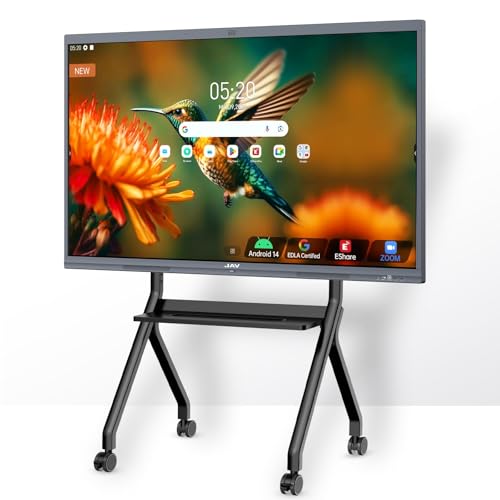
Enterprise-Ready Interactive Hub: 75" 4K UHD multi-touch glass with 0.8mm anti-glare coating, driven by NeoVision AI optics (30FPS gesture tracking) and Arm DynamIQ compute architecture (4*[email protected] + G52 GPU). Android 14 SuperDevice Engine sustains 16-layer whiteboarding sessions while managing 4K/60Hz wireless casting across 8 endpoints.
Effective Note-Taking Techniques

Effective note-taking is an essential skill that can greatly enhance our productivity during meetings. We can use several techniques to create effective meeting notes:
- Cornell Method: Divides our pages into sections for key points and summaries, promoting better retention.
- Outline Method: Helps us organize notes hierarchically, using the agenda as a backbone to enhance clarity.
- Quadrant Method: Segments notes into four categories: general notes, personal action items, team tasks, and questions.
- Shorthand Techniques: Incorporate symbols and acronyms to speed up our note taking.
- Digital Note-Taking Tools: These tools can use AI to help us organize notes and quickly search through them, making future meeting recaps much easier.
Implementing these methods can streamline our note-taking process considerably. A tidy workspace with multi-compartment organizers can also reduce distractions and make it easier to find writing tools and reference materials.
Recommended Products

THE ONLY TABLET THAT FEELS LIKE PAPER – With a paper feel never before experienced on a digital device, reMarkable 2 redefines note taking, reading, and reviewing documents. At just 4.7 mm thick, you can take it anywhere

Portable Cordless Smart Display: Built-in carry handle + large battery for true cordless use. At just 9.61 lbs, this digital calendar moves easily from kitchen to campsite. The 0–90° hidden stand supports wall mounting or desk calendar use, making this electronic calendar a versatile digital planner for any room

AI NOTE-TAKING & MEETING SUMMARY: The ultimate digital notebook and note-taking tablet with real-time voice-to-text, multi-language translation, meeting summaries, and schedule management.
Preparing for Note-Taking Ahead of Meetings

Preparing for note-taking ahead of meetings can considerably enhance our overall efficiency. Here’s how we can make it work:
- Structured Meeting Agenda: Preparing a clear agenda outlines key discussion points and action items, helping us focus during note-taking.
- Use Templates: Utilizing pre-designed templates standardizes our documentation, ensuring we capture essential elements like decisions and assigned tasks consistently.
- Familiarize with Methods: Knowing our preferred note-taking method, whether Cornell, Outline, or Quadrant, will help us be more efficient.
- Set Up Tools: We should prepare necessary tools, like word processors or collaborative apps, to streamline the capture of information.
- Practice Techniques: Learning shorthand or using digital tools will enable us to capture actionable insights quickly and accurately.
Adapters with gold-plated connectors can improve audio clarity and minimize distortion during virtual meetings or calls.
Recommended Products
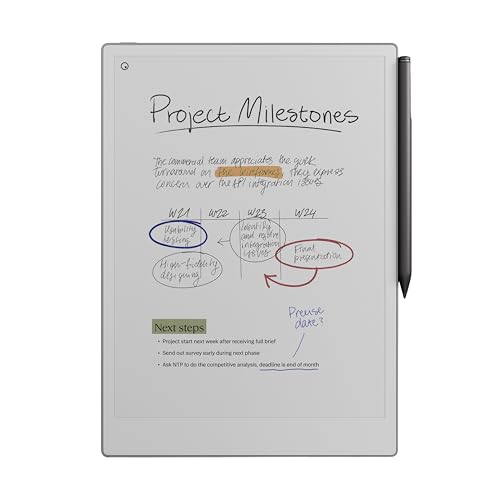
THE ULTIMATE PAPER TABLET – For the first time on a reMarkable paper tablet, you can write, sketch, and read in color. Ultra-slim and portable, but with a full-size 11.8” color display, adjustable reading light, and an unmatched paper-like writing experience.

The green and white pages that started it all continue to support those who appreciate a straightforward design and comprehensive structure. Naturally, these classic pages still feature quotes that provide you with daily motivation and inspiration *One year of planner pages with our renowned Prioritized Daily Task List and Appointment Schedule *All sizes now include two-page monthly calendar tabs *Additional pages for future planning

Organize tab dividers quickly with the printable table of contents sheet
Organizing Your Meeting Notes for Clarity
After establishing a solid foundation for note-taking, the next step is organizing those notes for clarity. We should use a structured template that includes:
- Agenda Items: Clearly outline the meeting’s focus.
- Key Discussions: Summarize major points for quick reference.
- Action Items: Highlight tasks needing attention, along with responsible individuals.
Utilizing methods like the Outline Method or Quadrant Method can help us categorize notes effectively. We’ll want to share our meeting notes promptly with all attendees, allowing for collaborative input to guarantee accuracy on follow-up actions. Maintaining a centralized repository for our meeting notes not only aids in knowledge sharing but also promotes continuous organizational learning. By focusing on clarity, we create a resource that’s easy to navigate and reference later. Consider integrating a multi-tiered organizer to keep physical meeting documents accessible and well-ordered.
Recommended Products

WORKSTATION SINK: Ledges on the front and back provide a track for the included accessories | LEDGEFIT: Farmhouse Sink is compatible with 40+ optional LedgeFit accessories that are interchangeable between different Ruvati workstation sinks, offering endless customization options

Durable natural-cork bulletin board with heavy-gauge aluminum frame secures documents with push pins

Tempered Glass, No Ghosting:Made from tempered safety glass, the glass whiteboard provides a smooth writing surface that erases cleanly without ghosting, staining, or yellowing over time, even with frequent daily use
Best Practices for Sharing Meeting Notes
When we share meeting notes promptly after a discussion, we enhance everyone’s ability to stay informed and accountable. Here are some best practices for sharing meeting notes effectively:
- Utilize Collaborative Tools: Use platforms like Google Drive or Slack to provide real-time access to meeting notes. This encourages team communication and engagement.
- Include Actionable Items: Clearly outline action items with specific assignments and deadlines. This guarantees everyone understands their responsibilities.
- Encourage Input: Invite participants to review the notes and provide feedback. This fosters a culture of collaboration and continuous improvement.
- Maintain a Centralized Repository: Store all meeting notes in a single location. This makes it easy to retrieve past discussions and track project progress efficiently.
Dual-layered designs like pop filters can also be used to improve the clarity of recorded meeting audio for accurate transcription and reference.
Transforming Notes Into Action Items
Transforming notes into actionable items is essential for ensuring that the outcomes of our meetings lead to tangible results. We can effectively extract action items from our meeting notes by identifying tasks assigned to responsible individuals, along with specific deadlines.
To enhance visibility, let’s organize action items in a dedicated section, separate from general discussion points. This allows for easier tracking. We can utilize project management tools like Asana or Wrike to convert action items into monitored tasks. Including each person’s name next to their tasks gives clarity around ownership, facilitating follow-up discussions in future meetings.
Lastly, it’s important to regularly review and update these action items to assess completion status and adjust timelines or responsibilities as necessary. Consider using a power strip with surge protection to keep devices charging reliably during longer review or workshop sessions.
Utilizing Technology for Streamlined Note-Taking
Utilizing technology can greatly enhance our note-taking process, making it more efficient and effective. Here are some key tools we can employ:
- AI Meeting Applications: These automate note organization, making information easily searchable and shareable.
- Transcription Software: Ideal for remote meetings, ensuring accurate capture of discussions without manual note-taking.
- Digital Note-Taking Tools: Facilitate collaborative note sharing, allowing team members to edit in real time and improve clarity.
- Project Management Tools: Like Asana or Wrike, which help integrate meeting notes into workflows for real-time task assignments.
- Meeting Notes Template: A structured format keeps our notes consistent and easy to read, enabling quick recall of action items assigned.
- Consider using a high-quality USB microphone (such as models with a cardioid pickup pattern) to improve audio clarity for transcriptions and recordings.
Recommended Products

Includes: (1) GLXD4 Wireless Receiver, (1) GLXD1 Wireless Bodypack Transmitter, (1) WL185 Lavalier Microphone (with windscreen and tie-clip), (1) SB902A Rechargeable Lithium-Ion Battery, (1) PS42US Power Supply, (1) USB Charge Cable and (1) Carrying Case

Includes: (1) GLXD4 Wireless Receiver, (1) GLXD2 Handheld Transmitter with Beta 58 Cardioid Microphone, (1) Microphone Clip, (1) PS42US Power Supply, (1) SB902A Rechargeable Lithium-Ion Battery, (1) USB Charge Cable and (1) Carrying Case

Package Includes: (2) Rockville 15" ABS Molded PA Speakers, (1) 8-Channel Powered Mixer with Bluetooth and USB/SD Playback, (2) Metal Wired Microphones with Mic Clips and XLR Cables, (2) Foldable Speaker Stands, (2) 10-Foot ¼” to ¼” Speaker Cables
Creating a Centralized Knowledge Base for Meetings
Creating a centralized knowledge base for meetings can greatly enhance our collaboration and productivity. By storing all meeting notes, action items, and decisions in a single, accessible location, we make it easier for team members to find essential information. Here’s how we can implement this:
- Use Work Management Tools: Platforms like Asana or Wrike help consolidate meeting notes, tasks, and deadlines.
- Enhance Organizational Memory: Regularly updating our knowledge base guarantees continuity for existing and new team members.
- Improve Decision-Making: Analyzing past notes allows us to learn from outcomes and track action items.
- Integrate AI Tools: These can streamline note-taking and make searching for specific information more efficient.
Together, we can build a more effective knowledge-sharing system. Ergonomic designs can also improve comfort and focus when working at a desk by elevating screens to reduce neck strain and improve posture, which supports better productivity.
Frequently Asked Questions
What Is the 40 20 40 Rule for Meetings?
The 40-20-40 rule enhances meeting efficiency by spending 40% presenting, 20% on engagement, and 40% summarizing action items. It boosts decision-making and effective feedback loops, essential in remote meetings with visual aids for clearer agenda importance.
What Are the 5 R’s of Note Taking?
The 5 R’s of note-taking include Record, Reduce, Recite, Reflect, and Review. By incorporating visual aids and bullet points, we enhance active listening, utilize digital tools, and apply effective review strategies for better retention.
How Can Making Effective Notes Improve Recall?
Making effective notes enhances recall through active listening and organizational methods. By using summarization strategies, visual aids, and technology tools, we boost memory enhancement and keyword significance, ultimately improving our review frequency and understanding.
How Should Meeting Notes Be Structured?
We should structure meeting notes like a roadmap, highlighting note formats, meeting objectives, and key takeaways. Incorporating summary sections, action items, and decision logs with timestamp references helps keep participant roles clear for effective follow-up.


