As an Amazon Associate, we earn from qualifying purchases. Some links on this site are affiliate links at no extra cost to you. Our recommendations are based on thorough research and editorial judgment.


Power Delivery Pass‑Through: What to Expect

Power Delivery Pass-Through enhances our USB hubs and docking stations, allowing them to charge multiple devices through a single connection. With this feature, we can enjoy dynamic power allocation, reducing cable clutter while ensuring efficient charging. However, we should note that some power may be reserved for the hub itself, which could lower overall output to connected devices. Understanding this will help us optimize our charging setup, and there’s more valuable information to explore in the details.
Key Takeaways
- Power Delivery Pass-Through enables charging of devices through a USB hub, streamlining connectivity with a single cable connection.
- It requires a suitable power adapter, typically at least 60W, to ensure adequate power for all connected devices.
- Reserved power in multiport adapters can limit charging availability for downstream devices, impacting performance of power-hungry peripherals.
- Ensure that the host device supports USB Power Delivery to maximize charging efficiency and performance.
- High-quality USB-C hubs may allow dynamic power allocation, optimizing charging speed for each connected device while supporting high data transfer rates.
What Is Power Delivery Pass-Through?
Power Delivery Pass-Through (PD Pass-Through) is a technology that enhances the connectivity and charging potential of USB hubs or docking stations. It allows power from an external power adapter to flow through a USB hub to connected devices without the hub generating power. Typically, we need a dedicated power adapter, like a USB-C PD laptop charger, to guarantee sufficient charging for both the hub and attached devices. While PD Pass-Through enables efficient charging, it may reduce the available power for downstream devices compared to direct charging. We can use high-wattage chargers, like those rated at 100W or more, to maintain adequate power distribution, making it possible to connect multiple peripherals simultaneously. Many multiport hubs also combine PD Pass-Through with 100W Power Delivery to support laptop charging and multiple connected devices.
Benefits of Power Delivery Pass-Through

When we consider the advantages of Power Delivery Pass-Through, it becomes clear that this technology considerably simplifies our charging needs.
Key Benefits:
- Single USB-C Connection: We can charge larger devices and power multiple devices with just one cable, reducing clutter.
- Dynamic Power Allocation: This guarantees each device receives its most efficient power supply, supporting charging speeds up to 70% faster than traditional USB chargers.
- Docking Stations: Utilizing a PD pass-through hub allows for efficient management, providing a centralized point for power and connectivity.
- Fast-Charging Capabilities: With USB Power Delivery (PD), we enjoy quicker charging times without sacrificing performance during data transfer.
Incorporating these features not only enhances our user experience but also streamlines our daily tech interactions. A high-quality hub will often include 100W Power Delivery to support charging powerful laptops and multiple peripherals.
Recommended Products

Powerful Processing: AMD 8-core Ryzen 7 8745HX Processor (Base Clock 3.6GHz, Max Boost Clock up to 5.1GHz, 32MB L3 Cache, 16 Threads).
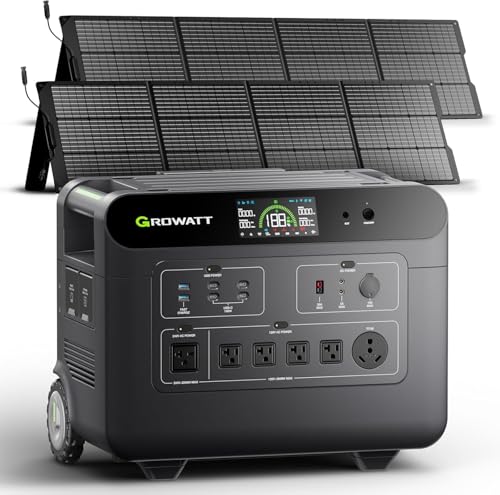
【All-in-One Solar Emergency Power Set】Comes complete with 3600Wh power station and 2 pieces 200W solar panels as full set. 3600W continuous output offers long standby runtime, easily power daily household devices and support long-term emergency power supply for refrigerators. Built with mature Growatt inverter technology for steady output, ideal for blackout emergency home backup.

【Ryzen 7 Powerhouse for AI & 4K Editing】As a video editor rendering 4K footage or a researcher running local AI tools, you know how frustrating lag can be. This laptop features the powerful AMD Ryzen 7 8745HS processor, delivering a full 54W of desktop-class performance. It ensures smooth operation when compiling massive datasets, running AI enhancers, or multitasking. No more stuttering—just pure, uninterrupted creative flow.
Reserved Power and Its Implications
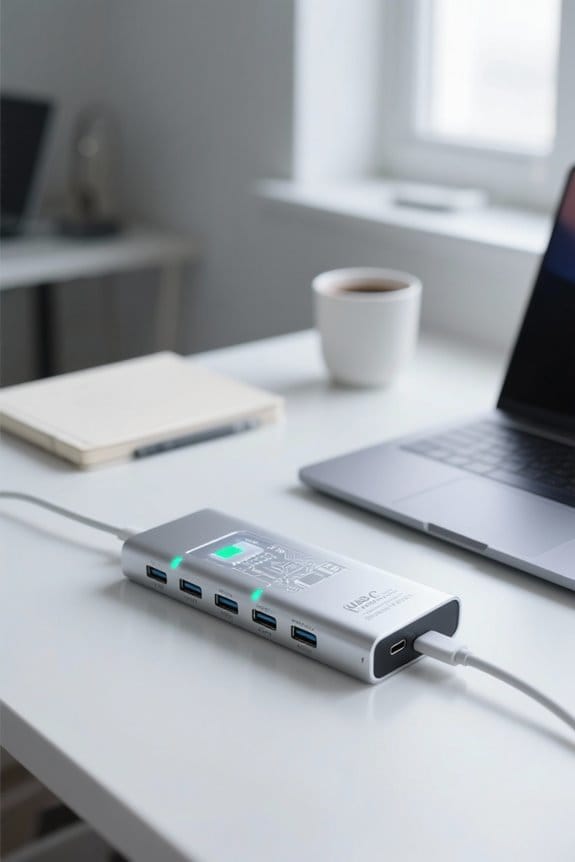
As we explore the advantages of Power Delivery Pass-Through, it’s important to take into account how reserved power in multiport adapters impacts our overall setup. Reserved power, typically between 4W to 15W, determines how much power our connected devices can receive. For example, a docking station like HB30C4AFPD reserves 7.4W for downstream use, which leaves us with only 52.6W from a 60W USB-C power adapter.
This reduction can greatly affect the performance and charging capabilities of power-hungry devices. Consequently, we must check the specifications of our multiport adapters to understand their reserved power allocation. By doing so, we verify that all connected devices maintain ideal power levels, enhancing our overall user experience with USB PD Delivery. Cable Matters and other manufacturers also offer high-quality pass-through designs that can influence power distribution and setup choices, so consider their pass-through connectors when selecting adapters.
Compatibility Considerations for USB PD Pass-Through

Understanding compatibility is vital for making the most of USB Power Delivery (PD) Pass-Through technology. Here are key considerations:
- USB-C Ports: Confirm your host device has USB-C ports that support Power Delivery to maximize charging capabilities.
- Power Adapters: Use a power adapter that delivers adequate wattage—at least 60W is typically required for laptops.
- Device Compatibility: Not all USB-C ports comply with the full USB PD standard, so check if your devices will work efficiently.
- Multiport Adapters: Be mindful that using multiport adapters may limit the total power available after accounting for your devices.
- Power Budget: Understanding your power budget is essential, as it determines how much power goes to each connected device.
Many powered USB hubs also include individual on/off switches and LED indicators to help manage connected devices and conserve power.
Recommended Products

27-inch wide gamut LCD with 3840 x 2160 pixels (4K UHD), 99% AdobeRGB and 98% DCI-P3 color space coverage

SIMPLE ASSEMBLY - The office pod requires on-site assembly, fitting through standard doorways. Two people can assemble the soundproof booth in 2 hours using included tools; an electric screwdriver speeds up the process. No prior experience needed
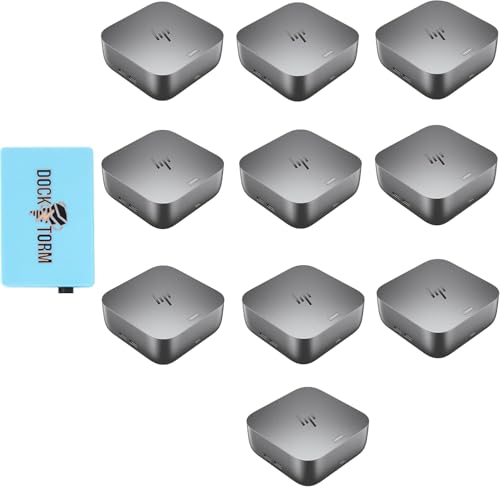
Power Connections – HP Quick Connect wakes your devices before you even take a seat. Stay in your flow all day with up to 280W of power delivery and 40 Gbps of data transfer speeds via Thunderbolt 4 technology and all the ports you need to connect your setup.
Optimizing Your Charging Setup With Power Delivery

How can we optimize our charging setup using USB Power Delivery (PD)? By implementing a USB hub with pass-through capabilities, we can streamline our charging process. Here are some key considerations:
- Power Adapter: Use a power adapter rated up to 100W to guarantee adequate power for the hub and connected devices.
- Power Distribution: Be mindful that power output might be reduced for connected devices since some power is reserved for the hub itself.
- Device Requirements: Dynamic adjustments in voltage and current allow for efficient charging tailored to each device’s needs.
- Data Transfer: Confirm our USB PD hub supports high data transfer speeds, like USB 3.0 or 3.1, along with sufficient power output, to maximize performance across all devices.
Top USB-C hubs also often include dual connectors to improve compatibility across devices.
Recommended Products

✔【Processor & Local AI Engine】Reatan X8 AI Mini PC, powered by AMD Ryzen AI 9 HX 470 (12 cores / 24 threads, up to 5.2GHz, 86 AI TOPS), featuring integrated AMD Radeon 890M graphics. With its built-in NPU (Neural Processing Unit), it can run large language models, AI assistants, and Windows Copilot directly on the device. Achieve ultra-low latency, powerful local AI processing without the cloud. Ideal for AI content creation, data analysis, programming, and light-to-medium gaming at high graphics settings. Built on TSMC's 4nm process for exceptional power efficiency.

【Ryzen 7 Power For Heavy Multitasking】: Need a laptop that keeps up with demanding work, study, and creative tasks? Powered by the AMD Ryzen 7 8745HS processor with 8 cores, 16 threads, and up to 4.9GHz boost speed, this NIMO laptop is built for coding, online classes, spreadsheets, design apps, AI tools, and everyday content creation. Switch between projects, meetings, research tabs, and productivity software with less waiting.

【2-Year Warranty | U.S.-Supported with Hassle-Free Returns】Your satisfaction is our top priority. Backed by NIMO Direct Inc., this laptop features a 2-year warranty, 90-day hassle-free return policy, and partial U.S. assembly. Our dedicated support team stands ready to deliver quick solutions for a worry-free experience.
Frequently Asked Questions
What Is Power Delivery Pass Through?
Power delivery pass-through’s a method that lets us charge devices efficiently by adhering to charging standards, enhancing device compatibility and energy efficiency. We enjoy optimized charging speeds, advanced circuit designs, and built-in safety features for our benefit.
Is Pass Through Charging Good?
Pass-through charging can be good, but we need to weigh efficiency concerns, safety precautions, device compatibility, charging speed, and energy waste. Let’s explore brand differences and technical limitations to enhance our user experience together.
What Does “Power Pass Through” Mean?
Power pass-through means a device allocates external power to charge itself and connected gadgets. We recognize the benefits, efficiency, and applications, but we should remain cautious of challenges and safety standards in power pass-through technology.
How Does Pass Thru Charging Work?
When we talk about pass-through charging, we’re looking at how pass-through technology efficiently distributes power from a reliable source, optimizing charging speed, enhancing battery life, and ensuring device compatibility through careful port selection and cable quality.


