As an Amazon Associate, we earn from qualifying purchases. Some links on this site are affiliate links at no extra cost to you. Our recommendations are based on thorough research and editorial judgment.


Store a Laptop Long‑Term: Preserve Battery Health

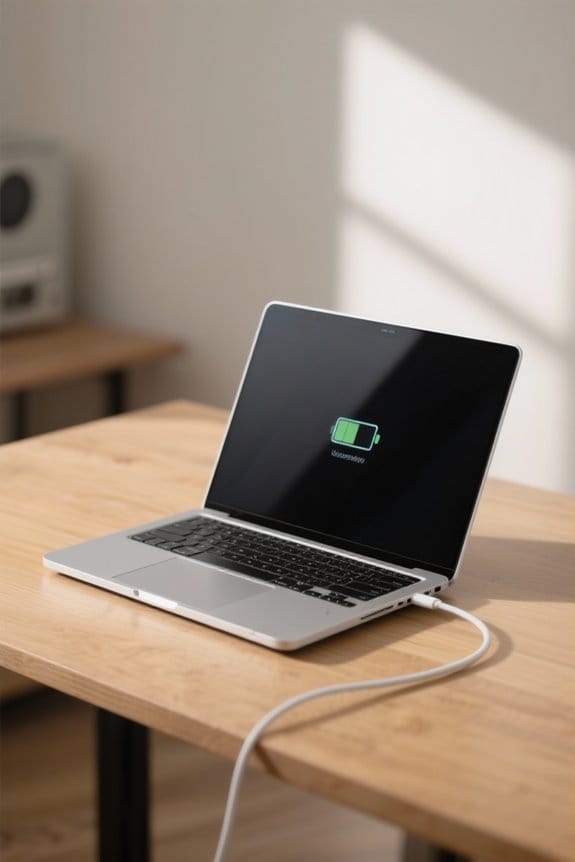
To store a laptop long-term and preserve battery health, we should follow these key steps: First, charge the battery to about 40%-60%, avoiding a full charge. Next, keep the laptop in a cool, dry place—ideally between 32°F and 68°F. We also need to guarantee the laptop is completely off to reduce power drain. Finally, we should check the battery’s status every few months. By implementing these practices, we can keep our laptops in good condition for years ahead.
Key Takeaways
- Charge the battery to approximately 40% to 60% before long-term storage to minimize stress and degradation.
- Store the laptop in a cool, dry environment between 32°F and 68°F (0°C to 20°C) to protect battery health.
- Turn off the laptop completely instead of using sleep or hibernation to reduce power drain during storage.
- Check the battery status and charge levels every few months to prevent deep discharge or swelling.
- Ensure proper ventilation around the laptop and avoid exposure to direct sunlight or humid areas during storage.
Understanding Battery Health and Storage Conditions
When it comes to storing our laptops long-term, understanding battery health and storage conditions is essential. To preserve battery health, we should keep the lithium-ion batteries charged between 40% and 60%. This range minimizes capacity loss over time. Storing the battery above 50% may lead to degradation, while letting it dip below 20% can cause deeper issues.
Additionally, the ideal storage temperature for our laptops lies between 32°F and 68°F (0°C to 20°C). High temperatures accelerate the aging of battery cells, so we need a cool, dry environment. It’s also important to regularly check battery health during storage. If any swelling or issues arise, we should take immediate action to prevent further damage. Ultra-thin silicone covers can also help protect laptops from dust and spills while stored, offering dust protection without interfering with device ventilation.
Recommended Products
![HIDevolution [2026] ASUS ProArt PX13 GoPro HN7306EAC Black 13.3" 3K OLED Touch, 3.0 GHz Ryzen Al Max+ 395, AMD Radeon, 128 GB LPDDR5X RAM, 2 TB PCIe SSD, Windows 11 Pro](https://m.media-amazon.com/images/I/310LLtpuBNL._SL500_.jpg)
AMD Ryzen Al Max+ 395 16 Core - 32 Thread Processor, 3.0 GHz (Max Turbo Frequency 5.1 GHz), 80 MB Smart Cache with AMD Radeon Graphics

POWER UP YOUR PLAY - Win more games with Windows 11 Pro, a 14th Gen Intel Core i9-14900HX processor, and an NVIDIA GeForce RTX 4070 Laptop GPU at 140W Max TGP.

Bundle Includes: 1 x Nikon Z 7II Mirrorless Digital Camera with 24-70mm f/4 Lens, 1 x Sony 64GB G Series XQD Memory Card, 1 x EN-EL15c Rechargeable Battery, 1 x Corel Photo Software With PhotoMirage, AfterShot, Painter Essentials, PaintShop Pro, and Video Studio, 1 x Soft Padded Case, 1 x High Quality HDMI Cable, 1 x Memory Card Reader, 1 x Deluxe Cleaning Set, 1 x Memory Card Wallet, 1 x Hand Strap
Optimal Charging Practices Before Storage

To guarantee our laptop batteries remain healthy during long-term storage, we should follow ideal charging practices. First, we need to ascertain the battery is charged to about 40% to 60% before storing. This level helps prevent capacity loss, which can occur during inactivity. We should avoid fully charging the battery to 100%, as it increases stress and accelerates degradation.
Next, it’s essential to completely shut down the laptop rather than leaving it in sleep or hibernation mode, which can drain the battery. For ongoing battery maintenance, we recommend checking the battery status regularly during storage and recharging it to the recommended level every few months. By doing this, we can maintain our battery’s health more effectively. Many replacement batteries include overcharge protection and other safety features that help prevent damage and extend lifespan.
Recommended Products

The Alpha 9 III introduces the world's first full-frame sensor with a global shutter, capturing fast-moving subjects without distortion, thanks to simultaneous pixel exposure and reading.
80V Motor – 2 x more torque, more power, longer runtimes, quiet operation, and extended motor life

🚀 Next-Gen AI Performance with Intel Ultra 7 & NPU: Experience intelligent computing powered by the 13th Gen Intel Core Ultra 7 255U processor, featuring 12 cores and a dedicated AI NPU delivering 12 TOPS. This laptop accelerates creative tasks, multitasking, and AI-driven applications—perfect for professionals and creators seeking desktop-level power with intelligent efficiency.
Environmental Considerations for Long-Term Storage

Creating the right environment for long-term laptop storage is essential for preserving its longevity and functionality. We should store your laptop in a cool, dry space, ideally between 32°F to 77°F (0°C to 25°C). This helps prevent battery deterioration from heat.
- Avoid leaving your laptop in humid areas or direct sunlight, as moisture can harm internal components.
- Keep the battery charged between 40% and 60% for ideal health.
- Make sure the laptop is completely turned off instead of in sleep or hibernation mode. This reduces power drain and potential issues.
Finally, checking the battery status every few months can help maintain its health and avoid problems like deep discharge or swelling. Many accessories, including portable, durable adapters, are designed with aluminum builds to help with ventilation and longevity.
Recommended Products

Processor: 13th Generation Intel Core i9-13980HX Processor (E-cores up to 4.00 GHz P-cores up to 5.60 GHz)

WiFi 7 ensures smooth data and video calls. ThinkShield and the Trusted Platform Module provide built-in security and data encryption, reducing hacking risks.

Processor: 13th Generation Core i9-13980HX Processor (E-cores up to 4.00 GHz P-cores up to 5.60 GHz)
Maintaining Laptop Temperature During Storage

Maintaining proper temperature during storage is crucial for our laptop’s health and performance. A laptop battery thrives in a cool, dry environment, ideally between 32°F to 95°F. High temperatures can cause accelerated battery capacity loss and shorten overall battery longevity.
To protect our laptop:
- Avoid hot places, like inside a car or direct sunlight, where temperatures can skyrocket.
- Store the laptop with the battery charged below 50% to minimize capacity loss and prevent deep discharge issues.
- Promote good ventilation around the laptop during storage to avoid overheating.
- Reconnect the laptop and perform a full charge cycle every few months if it’s been in storage for a while, keeping the battery healthy for future use.
High-density memory foam wrist rests can improve comfort during extended use and help reduce strain on your hands and wrists, providing better support for ergonomic posture while you work with your stored device memory foam.
Recommended Products

The Panga Backpack is an airtight, waterproof fortress merging the durability of the Panga Duffel with a tried-and-true backpack design

Durable exterior shell is built tough with abrasion resistance

Set of 20 wholesale backpacks: 17.5-inch clear PVC backpack for security checkpoints, stadiums, and concert and sporting events
Regular Battery Health Checks and Monitoring

Checking our laptop’s battery health regularly is essential, especially when we store it for long periods. Here’s how we can effectively monitor our battery health:
- Use Built-In Tools: We can utilize Windows’ battery report or apps like BatteryInfoView to check capacity percentage and cycle count.
- Ideal Charge Levels: During storage, aim for a battery charge between 40% and 60% to minimize capacity loss.
- Regular Assessments: Performing battery checks every few months helps in identifying issues like rapid capacity decline.
- Track Charge Cycles: A lithium-ion battery stays healthy within 300-1000 charge cycles, so monitoring is vital.
- Set Notifications: Enable operating system alerts for battery health changes, so we’re notified of any potential deterioration.
Metal alloy and sturdy stability in storage conditions can help prevent hardware damage over time.
Recommended Products

ENTERPRISE-READY PERFORMANCE - Built for business professionals and SMBs who want more than the E16 without stretching to the T16, the ThinkPad L16 delivers dependable performance, durable design, and exceptional value for everyday productivity. Engineered for reliability, it is MIL-STD-810H certified to withstand demanding fieldwork and travel. With long battery life and rapid charging (80% in 1 hour), keeping you productive on the go

1.1800W Ultra-Fast Charging: Featuring an advanced 1800W AC fast charging solution, the powerstation can charge from 0% to 80% capacity in an extremely short time, significantly reducing waiting time. Additionally, the powerstation includes a fast/ slow charging selector switch, allowing users to flexibly choose the charging mode based on the capacity of their local power circuit. This ensures both efficient fast charging and safe operation under older wiring or power-limited conditions, preventing overload risks

It is with 6.5MHz Micro Convex Probe.The frequency for the probe is:5.0-7.5MHz. Suitable for Pregnancy In Animals and mainly suitable for the ultrasonic examination of small dogs ,Cats,Rabbits and so on.
Reusing and Revitalizing Your Laptop Battery Post-Storage
When we bring our laptop out of long-term storage, it’s important to revitalize the battery to confirm peak performance. To uphold battery health, let’s follow these steps:
- Check Charge Level: If the laptop hasn’t been used in a while, the charge level may be low. Charge the battery to at least 40% before use.
- Perform a Cycle: Execute a full charge and discharge cycle. This recalibrates the battery management system and can improve performance in lithium-ion cells.
- Inspect for Damage: Before reconnecting to power, check for signs of swelling or expansion in the battery. If we notice this, we should stop using it immediately due to safety concerns.
Many replacement batteries include safety certifications such as UL, CE, or FCC to ensure protection against overcharge and short circuits.
Frequently Asked Questions
How to Maintain a Laptop Battery for Long Life?
To guarantee our laptop batteries last, let’s adopt solid battery maintenance tips: keep charge between 40%-60%, avoid heat, disconnect extras, and follow ideal charging practices. Together, we can boost our battery longevity strategies efficiently.
How to Store a Laptop Battery When Not in Use?
To store our laptop battery effectively, we should use proper battery storage techniques, keeping it at an ideal temperature between 32°F and 68°F. This helps guarantee battery health preservation during periods of inactivity.
What Is the 40 80 Rule for Laptop Batteries?
The 40-80 rule for laptop batteries suggests we keep our charging habits within 40% to 80%. This helps enhance battery longevity, reduces heat exposure, and ultimately promotes a healthier, longer-lasting battery life.
How to Store a Laptop for 6 Months?
To store a laptop for six months, we should use proper laptop storage methods, keep it in ideal temperature conditions, charge it to 50%, and check battery discharge levels regularly to maintain its health.